




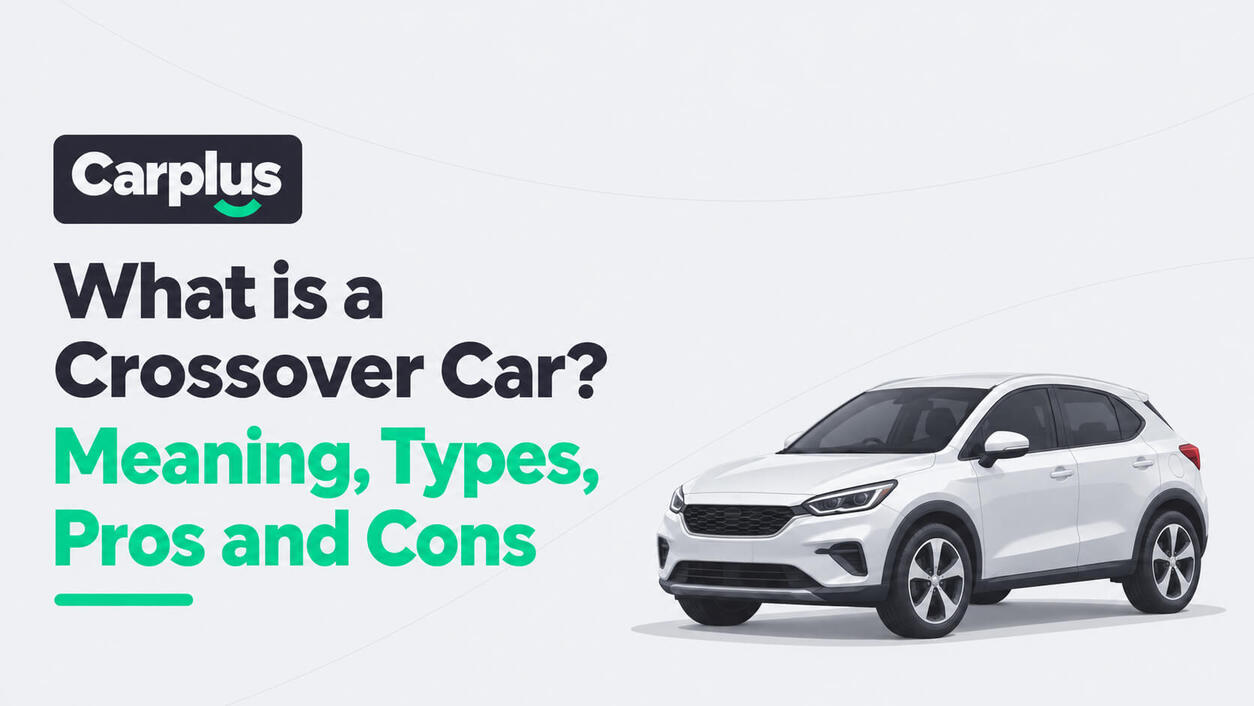
The Ford Puma, the UK's best-selling new car in 2024 and again in 2025, is usually called a crossover, even though Ford sells it as an SUV. So what is a crossover car, and how is it different from an SUV or a hatchback? The answer shapes how much room you get and what you'll pay to run one.
What does crossover mean?
A crossover is a car that combines an SUV's raised height and chunky styling with the size, comfort and running costs of a hatchback. It seats you higher than a hatchback does, but the car is still easy to park and affordable to run every day.
The name crossover comes from crossing a hatchback with an SUV, and you'll also see these cars called CUVs (crossover utility vehicles) or compact SUVs. Most car makers treat the crossover as the smallest, most car-like type of SUV. So on dealer websites and in brochures, you'll usually find them listed under "SUV".
What makes a car a crossover?
A crossover has no official definition, so car makers use the name for cars that share a handful of features. Most crossovers have these in common:
- Hatchback underpinnings: a crossover shares its platform (the floor, suspension and engine mounts underneath) with a hatchback from the same brand. Its body and frame are built as one piece, like any ordinary car's.
- Raised ride height: the car sits higher off the road than that hatchback, though the gap can be modest.
- Higher seat: the driver's seat sits more upright and closer to hip height.
- SUV looks: the body wears black cladding over the wheel arches and sills, often with roof rails on top.
- Front-wheel drive as standard: two-wheel drive comes as standard, with four-wheel drive as an option on some models.
Older, rugged SUVs sat on a separate steel chassis, and that used to be the dividing line. But most modern SUVs are built in one piece too, so construction alone no longer separates a crossover from an SUV.
How to tell if a car is a crossover
The surest way to tell if a car is a crossover is to find the hatchback it's built on, because the badge alone isn't reliable. Each car maker's own label decides what a model is called, so the same car can be a crossover in a review and an SUV in a brochure.
These popular models each have a hatchback twin from the same brand [confirm platforms]:
| Hatchback | Crossover built on it |
|---|---|
| Kia Ceed | Kia XCeed |
| Toyota Yaris | Toyota Yaris Cross |
| Volkswagen Polo | Volkswagen T-Cross |
| Renault Clio | Renault Captur |
Size and drive give the final clue. A car that's no bigger than a family hatchback and drives two wheels as standard is a crossover in all but name.
Is a crossover the same as an SUV?
A crossover is a smaller, car-based type of SUV rather than a different kind of car. It's lighter and closer to hatchback size, while a larger SUV offers more space, sometimes seven seats, and can tow heavier loads. Larger SUVs are also more likely to come with four-wheel drive.
A 4x4 sits at the far end of the range. A 4x4 such as the Land Rover Defender is built for mud and steep tracks, which a crossover isn't.
| Crossover | Larger SUV | 4x4 | |
|---|---|---|---|
| Based on | A supermini or family hatchback | A larger car or SUV platform | An off-road design |
| Seats | Five | Five or seven | Five or seven |
| Driven wheels | Usually the front two | Two or four | Four, with off-road settings |
| Towing | Light trailers | Caravans and bigger trailers | The heaviest loads |
| Suits | Town and family driving | Bigger families and long trips | Farm tracks, green lanes, heavy towing |
The crossover or SUV label doesn't change how a car is taxed, insured or financed, so compare the size, price and running costs rather than the name. The guide to what makes a car an SUV covers the bigger models.
Crossover vs hatchback: what's the difference?
A crossover sits higher and usually costs more than the hatchback it's based on, while sharing most of its engines and equipment. The extra height brings a better view and an easier climb in.
Yet a crossover isn't always roomier. Some hatchbacks have a bigger boot than their crossover twin.
| Crossover | Hatchback | |
|---|---|---|
| Seat height | Higher, near hip height | Lower |
| Child seats | Less bending | More bending |
| Boot | Similar, sometimes smaller | Similar, sometimes bigger |
| Fuel use | A little higher | A little lower |
| Cornering | More lean | Flatter and sharper |
| Price | Usually higher | Usually lower |
There's more on how a hatchback is built and used. Or, if the lower car suits you, compare the best used hatchbacks in the UK.
Crossover vs estate and MPV
A crossover gives you a higher seat and an easier climb in than an estate car. An estate usually carries more luggage for the same length, since its load floor is longer and sits lower.
An MPV gives more flexible seating than most crossovers, with sliding or individually folding rear seats on many models. The MPV vs SUV guide compares the two for families.
Need a long, flat boot for dogs, bikes or flat-pack furniture? An estate is still the better fit. Still, if an easier climb in and a higher view matter more, a crossover suits you better.
Do crossovers have four-wheel drive?
Most crossovers drive only the front wheels, and four-wheel drive is an option on just some models. Small crossovers such as the Ford Puma and Nissan Juke are front-wheel drive only. Some versions of the Nissan Qashqai and Toyota Yaris Cross drive all four wheels.
Four-wheel drive adds weight and cost, and it uses a little more fuel. Most drivers never need the extra traction. So four-wheel drive is only worth paying for if you live up a steep or unmade lane, tow often, or regularly drive on wet grass or snow.
Can a crossover go off-road or in snow?
A crossover copes with gravel tracks, kerbs and potholes, but it isn't built for mud or steep off-road climbs. The extra ground clearance helps on rutted lanes and in deep snow, where a lower car can get stuck.
Snow and ice are a different story. On ice, winter or all-season tyres make more difference than four-wheel drive, which does nothing for braking. The guide to the best cars for snow and ice has more.
Types of crossover
Crossovers range from supermini-sized town cars to coupe-styled family models, and the type decides how much room you get.
Small crossovers
A small crossover is based on a supermini, so it's about as long as a small hatchback but sits higher. It suits town driving and one or two people, with room for the odd rear passenger. The Ford Puma, Renault Captur, Nissan Juke and Volkswagen T-Cross are typical.
Family crossovers
A family crossover is based on a family hatchback such as the Volkswagen Golf or Kia Ceed, with space for four adults and a pushchair in the boot. The Nissan Qashqai, Volkswagen T-Roc, Kia XCeed and Toyota C-HR sit here.
Coupe-style crossovers
A coupe-style crossover, such as the Peugeot 408, has a roof that slopes down towards the tail, so it looks sleeker but gives up some rear headroom and boot space. The roofline can also shrink the rear window, so check the view behind you on a test drive.
Electric and hybrid crossovers
An electric crossover runs on battery power alone, with no exhaust emissions, though the battery makes it heavier than a petrol version. The Volvo EX30, Ford Puma Gen-E and Mini Aceman are typical, and car finance for an electric crossover works the same way as for any other car.
And hybrid crossovers are common too, from mild hybrids like the Ford Puma to full hybrids like the Toyota C-HR. Here's how electric, hybrid and plug-in cars compare if you're choosing between them.
Are crossovers practical?
Crossovers are practical for most drivers, with more headroom than their hatchback twin, though the boot is often about the same size. So check the boot figure in litres rather than going by how big the car looks.
A crossover's seats sit close to hip height, so you slide in rather than drop down. This hip-height seat makes the car a good fit for drivers and passengers with stiff knees or limited mobility. There's a list of cars with the highest driving positions if that matters most.
For families, a crossover's higher rear bench means less bending when you lift a child into a car seat. Small crossovers rarely fit three child seats across, though, and these cars that take three child seats are worth a look if you need that [confirm].
One trade-off is easy to miss. A crossover's boot lip can sit higher than a hatchback's, so heavy shopping, pushchairs and older dogs need lifting further.
What is a crossover like to drive?
A crossover drives much like the hatchback it's based on, because it shares the same platform, engines and steering. The higher seat gives a better view of traffic ahead, which many drivers find more relaxing in town and on the motorway.
The higher centre of gravity means a crossover leans more through corners than its hatchback twin. On a normal commute, you're unlikely to notice the lean. But a hatchback still feels sharper on a twisty B-road.
Crossovers are easier to park than larger SUVs, though thick rear pillars and a small rear window can leave blind spots on some models. Parking sensors or a reversing camera help with those blind spots.
Are crossovers safe?
A crossover isn't safer just because it sits higher. Height doesn't decide crash protection. The model's Euro NCAP rating, given as 0 to 5 stars, tells you far more about how well it protects you in a crash. Check it for the exact model you're considering.
Are crossovers cheaper to run than SUVs?
A crossover usually costs less to run than a larger SUV, because it's lighter and has a smaller engine or battery. Against its hatchback twin, though, a crossover costs a little more to run, since the taller body adds weight and drag.
Every model sits in an insurance group from 1 (cheapest) to 50, and that group reflects its price, repair costs and performance, not its body style. A small crossover with a modest engine can sit fairly low.
Vehicle Excise Duty (VED), better known as road tax, is based on a car's CO2 emissions and list price, so calling a car a crossover changes nothing. Most new crossovers also stay under the £40,000 list price where an extra yearly charge kicks in, or £50,000 for newer electric cars . The current vehicle tax rates are on gov.uk.
Carplus eligibility checker shows a likely monthly repayment, but that's only part of the bill. Budget for insurance, road tax, fuel and tyres on top, and this breakdown of what it costs to run a car covers each one.
Pros and cons of a crossover
A crossover's main strength is the higher, easier seat in a car that's still hatchback-sized, and its main drawback is paying more for it than for the hatchback underneath.
Pros
- Better view: the raised seat lets you see further down the road.
- Easy to get in and out: the seats sit near hip height.
- Kinder on your back with child seats: you bend less to strap children in.
- Easier to park than a larger SUV: the footprint is close to a hatchback's.
- Cheaper to run than a larger SUV: less weight means less fuel or electricity.
- Plenty of choice: you can pick petrol, hybrid or electric versions in most sizes.
Cons
- Higher price: a crossover usually costs more than the hatchback it's based on.
- Not always roomier: the boot may be no bigger than a hatchback's.
- Slightly dearer to run than a hatchback: the taller body adds weight and drag.
- More lean in corners: a hatchback feels sharper on twisty roads.
- Limited off-road and towing ability: mud, steep tracks and heavy caravans need a larger SUV or a 4x4, so check the towing limit in the handbook.
- Higher boot lip: heavy loads need lifting further.
Can you buy a crossover on finance?
Crossovers can be bought new or used on car finance, provided a lender is satisfied you can afford the monthly repayments. Hire Purchase (HP) spreads the full price over fixed monthly payments, and the crossover is yours once the last one clears.
With Personal Contract Purchase (PCP), you pay less each month but don't own the car unless you pay the optional 'balloon payment' at the end. That lump sum is based on what the car should be worth by then.
Not sure which suits you? This side-by-side shows how HP and PCP car finance differ.
Carplus arranges finance on cars costing £4,000 to £40,000 with no more than 120,000 miles on the clock. That range takes in almost every used small and family crossover, and dealers across the UK list used SUVs and crossovers on finance.
Because Carplus works with any UK dealer, you can settle on the exact crossover first and price up its insurance before you apply. You can then run a free car finance eligibility check using a soft search through Carplus, which leaves your credit score untouched.
Buying used? Run through these checks before buying a used car, including whether it still has finance owing.
Table of Contents