




You'll see the word "hatchback" on most car listings, usually next to saloon, estate and SUV. So what is a hatchback, and why does the body style matter when you're choosing a car? The short answer lies in how the boot opens, and that one detail affects what you can carry and which car suits you.
What is a hatchback car?
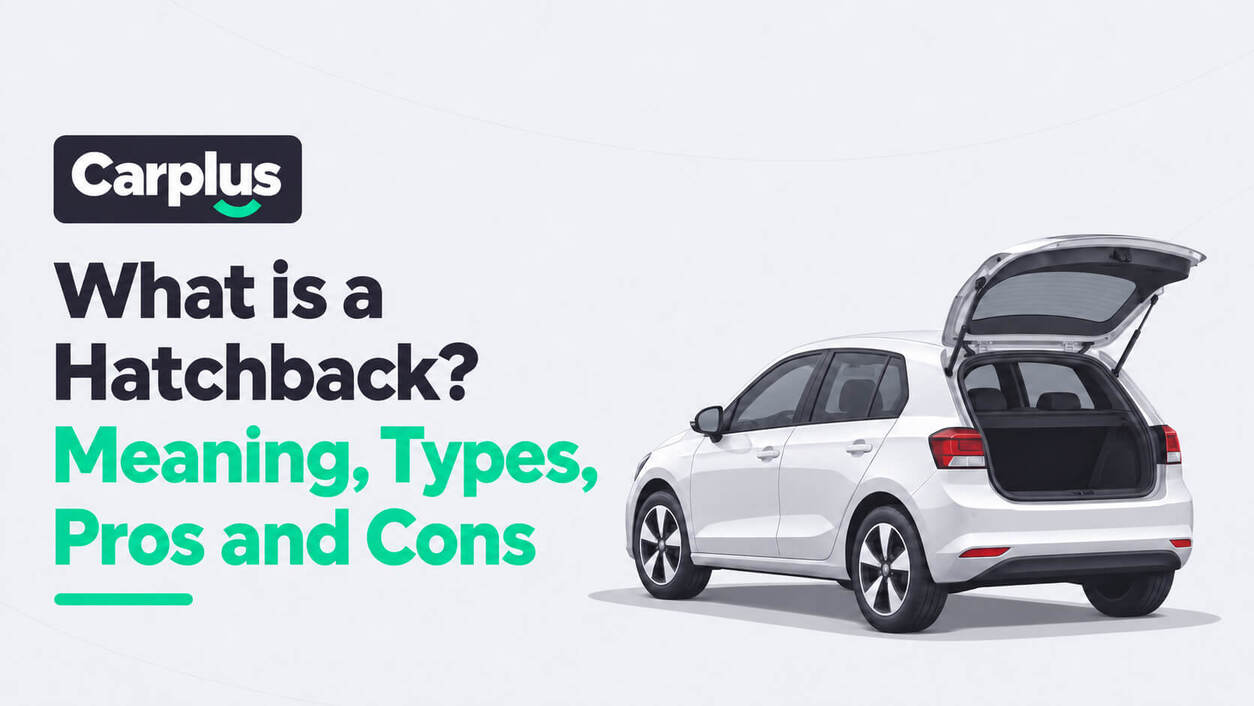
A hatchback is a car body style with a rear door that's hinged at the roof and lifts up together with the rear window, so the boot opens straight into the cabin. The lifting tailgate leaves a wide opening, so a pushchair or flat-pack furniture goes straight in.
The name comes from that rear door, the hatch. Car makers usually call it a tailgate, and the tailgate is the one feature every hatchback shares, from a small city car to a high-performance hot hatch.
Key features of a hatchback
A hatchback uses a two-box design, with one section for the engine and one shared by passengers and luggage. Most of its other features follow from that layout:
- Top-hinged tailgate: it opens higher than a saloon's boot lid, which helps with tall or bulky loads.
- Fold-down rear seats: the rear seats in most models fold flat, and many split so one person can still sit in the back.
- Parcel shelf: a removable shelf covers the boot and lifts out when you need to stack taller items.
- Short rear end: the bodywork stops at the rear wheels, which keeps the car compact and easy to park.
How many doors does a hatchback have?
A hatchback has 3 or 5 doors, because car makers count the tailgate as a door. So a 3-door model has one passenger door on each side, and a 5-door adds a pair of rear doors.
A 3-door hatchback often looks sportier. But anyone sitting in the back has to climb in past a folded front seat. A 5-door makes child seats far easier to fit, which matters if you'll regularly carry passengers. The same counting explains why a saloon is often called a four-door.
Hatchback vs saloon: what's the difference?
A hatchback differs from a saloon in how the boot opens. A hatchback's rear window lifts with the tailgate; a saloon's boot has its own lid below a fixed rear window and stays sealed off from the cabin.
| Hatchback | Saloon | |
|---|---|---|
| Boot opening | Tailgate lifts with the rear window | Boot lid hinged below the rear window |
| Boot and cabin | One shared space | Separate boot, sometimes behind a fixed panel (bulkhead) |
| Loading bulky items | Easier, through a wide opening | Harder, through a narrower gap |
| Road noise | More noticeable, as the boot is open to the cabin | Quieter, as the boot is closed off |
| Luggage security | Bags can be seen through the rear glass | Bags stay out of sight |
A saloon suits you if you want a quieter cabin and a hidden boot. But if you often carry big or awkward loads, a hatchback makes more sense. If you're still torn, the pros and cons sit side by side in hatchback vs saloon: differences, pros and cons.
Hatchback vs estate and SUV
A hatchback is shorter than an estate car and sits lower than an SUV, so it usually costs less to buy and is easier to park, but it carries less.
An estate car uses the same rear door on a longer body that carries on past the rear wheels to make room for a bigger boot. An SUV sits higher and has more ground clearance, which helps on rough roads and makes getting in and out easier.
An SUV has a top-hinged tailgate too, but it's classed by its height and ground clearance rather than by its boot. A crossover sits in between, pairing the size of a family hatchback with the raised ride height of an SUV (see crossover vs SUV: what's the difference).
| Hatchback | Estate car | SUV | |
|---|---|---|---|
| Length | Shortest | Longest | Varies by size |
| Ride height | Low | Low | High, with more ground clearance |
| Boot space | Smallest of the three | Largest | Bigger than a hatchback of a similar size |
| Price to buy and insure | Usually lowest | Usually a little higher | Usually higher |
| Suits | Town driving and tight parking | Big loads and long trips | Rough tracks and a higher seat |
If you rarely carry more than a weekly shop and a couple of suitcases, the hatchback is usually the cheaper choice. Need the biggest boot for the money? An estate car gives you more space without the extra height of an SUV.
Types of hatchback
Hatchbacks come in 2 main sizes, small and family, and each size has a high-performance version known as a hot hatch. If you're buying second-hand, Carplus has ranked the 15 best used hatchbacks in the UK.
Small hatchbacks
A small hatchback, often called a supermini (or B-segment car), is built mainly for town driving, with a short body that slips into tight spaces. Well-known examples include the Volkswagen Polo, Vauxhall Corsa and Toyota Yaris. The Ford Fiesta is no longer built new, but plenty are still on sale used.
Family hatchbacks
A family hatchback (C-segment) gives you more rear legroom and a bigger boot than a supermini, while still fitting a normal parking space. The Volkswagen Golf, Vauxhall Astra, Toyota Corolla and Audi A3 all fall into this group. The Ford Focus is no longer built new either. Yet it's a common used buy.
If boot space comes first, compare the best used cars with big boots for families.
Hot hatches
A hot hatch is a high-performance version of a small or family hatchback, with a more powerful engine, firmer suspension and a sportier look. The Volkswagen Golf GTI, Honda Civic Type R and Toyota GR Yaris are among the best known. That speed comes at a price. A hot hatch usually costs more to insure and run, because it's built for performance rather than economy.
Pros and cons of a hatchback
A hatchback gives you more usable space than its size suggests, but it can't match an estate car or SUV when you need the most room.
Pros
- Easier parking: the short body fits tight bays and narrow streets.
- Lower price: it usually costs less than an estate or SUV from the same maker.
- Lower fuel use: smaller, lighter models tend to use less fuel than bigger cars.
- Flexible boot: with the rear seats folded, the car turns into a small load carrier.
Cons
- Less space: the boot and cabin are smaller than in an estate or SUV.
- Tight rear seats: some small models leave little legroom for adults in the back.
- More road noise: the open boot lets more sound into the cabin.
- Visible luggage: bags can be seen through the rear glass, so keep the parcel shelf in place to hide them.
Are hatchbacks cheap to insure and run?
Most small and family hatchbacks sit in low insurance groups, which makes them some of the cheaper cars to insure, but hot hatches sit much higher. Groups run from 1 (cheapest) to 50, and small hatchbacks make up most of the Carplus list of the cheapest cars to insure for new drivers.
Your own premium still depends on you. Insurers look at your age, where you live, your claims history and how you use the car, so two drivers can pay very different amounts for the same model.
The body style makes no difference to road tax, which is based on a car's CO2 emissions and list price. So a hatchback pays the same as a saloon or SUV with the same figures.
Can you buy a hatchback on finance?
A new or used hatchback can be bought on car finance, as long as a lender is happy the monthly repayments fit your income.
The 2 most common agreements are Hire Purchase (HP) and Personal Contract Purchase (PCP). With HP, you own the car after the final payment; with PCP, you pay less each month but own the car only if you make a final 'balloon payment'. The main differences between PCP and HP come down to monthly cost and who owns the car at the end.
Many used superminis and family hatchbacks fall within the range Carplus can arrange finance for, which covers cars priced from £4,000 to £40,000 with up to 120,000 miles. Plus, Carplus works with any UK dealer. So you can choose the car first and sort the finance around it.
Carplus starts with a soft search through its free car finance eligibility checker, so checking won't affect your credit score.
Table of Contents