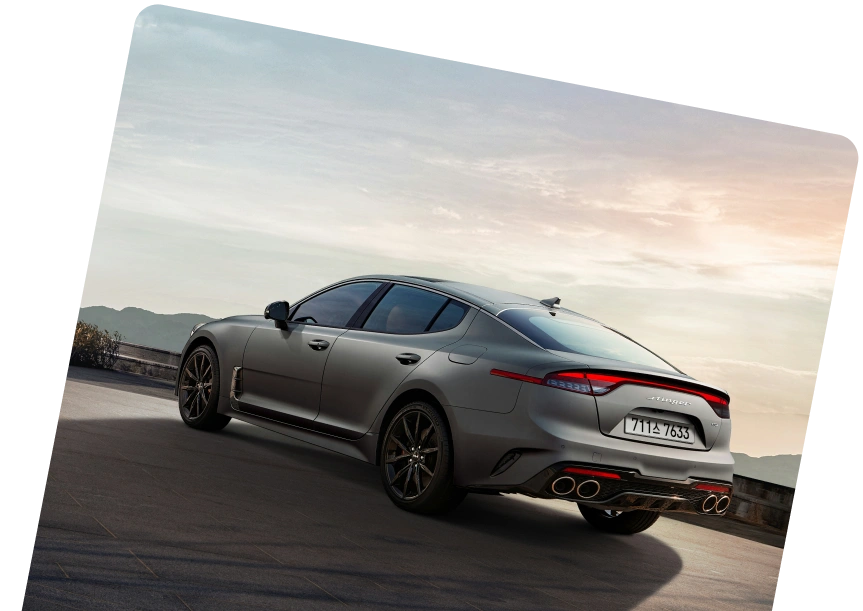





If you're asking yourself whether you should buy an electric car in 2026, you're in good company. Electric vehicles have moved well beyond early-adopter territory. There are now over 150 models on sale in the UK, and used prices have fallen sharply — making the switch more accessible than it has ever been.
But the decision is genuinely tricky. You might be unsure whether the savings on fuel and running costs actually outweigh the higher purchase price. You may be worried that not having a driveway puts the whole thing out of reach. And if you occasionally cover longer distances, you are probably not confident the UK charging network is reliable enough to depend on.
This guide cuts through the noise. By the end, you will know whether an EV makes financial sense for your specific situation, what your real charging options are if you cannot charge at home, and whether buying now or waiting is the smarter move.
Should I switch to an EV? Four questions to ask before you decide
The honest answer to "should I switch to an EV?" depends less on the car than on 4 things about your life. Get these right and the decision becomes straightforward. Skip them and you risk buying a car that doesn't suit how you actually live.
1. Can you charge at home?
Home charging is the single most important factor in this decision. If you have a driveway or a garage, you can install a home charger for around £800–£1,000, plug in overnight, and start every morning with a full battery. That changes your running costs dramatically. If you don't have off-street parking, an EV can still work for you — but the economics shift, and you'll need a different strategy. The dedicated section on charging without a driveway covers your options in full.
2. What is your typical daily mileage?
According to GRIDSERVE, the average UK driver covers around 20 miles per day, and 95% of all car journeys in the UK are under 25 miles. A modern electric vehicle handles that distance on a fraction of a single charge. If your commute and daily errands sit in that range, range anxiety simply isn't a real concern for you.
3. Do you need to tow regularly?
Towing reduces an EV's real-world range significantly. If you tow a caravan or a heavy trailer more than occasionally, check the towing rating of any model you shortlist — not all EVs are rated for it, and those that are will see a meaningful drop in range when loaded.
4. Does your employer offer workplace charging?
Workplace charging, subsidised through the Workplace Charging Scheme grant, can cover up to 75% of installation costs. If your employer offers it, your ability to charge for free or at low cost during the day changes the no-driveway maths entirely.
Here's your quick verdict: home charging plus a typical commute under 25 miles makes an EV a strong financial case right now. No driveway but workplace charging available? Still viable. No home charging and no workplace option? Read the dedicated charging section before you decide — it's not a dealbreaker, but it does change the numbers.
When does an EV make sense?
For most UK drivers, the mileage maths is already settled. The average UK driver covers around 20 miles per day, and 95% of all car journeys are under 25 miles. A modern EV's real-world range handles almost all everyday trips comfortably.
That distinction matters because where you charge determines whether an EV genuinely saves you money or ends up costing more than your current petrol car. The average EV owner spends around £680 per year charging at home, compared with approximately £1,820 per year if relying solely on public chargers. That £1,140 annual difference comes down to one tax rule: home electricity is charged at 5% VAT, while public chargers pay 20% VAT. So if you can charge at home most of the time, the financial case for an EV is strong. If you cannot, you need to plan more carefully.
The 40-mile daily threshold gives you a practical starting point. If your daily commute and local errands sit under 40 miles, you can cover a full week's driving on a single overnight home charge using most modern EVs. That removes the need to use public chargers altogether, beyond the occasional longer journey.
What if you don't have a driveway?
No driveway does not rule out an EV. It does change the financial calculation, and you need to factor that in honestly.
Three options are worth knowing about. First, cross-pavement charging cable channels can be cut flush into the pavement outside a terrace or flat, removing the trip hazard of a cable running across the footpath. These cost between £499 and £999 installed, and the OZEV (Office for Zero Emission Vehicles) government grant covers up to £500 for renters, flat owners, and homeowners without off-street parking. Second, lamppost chargers are available in a growing number of urban areas, giving street parkers a slow overnight charge without a home installation. Third, workplace charging can serve as your primary daily top-up if your employer has the scheme in place.
No driveway is a hurdle, not a wall. But plan your charging before you commit.
Workplace charging as an alternative
The UK Workplace Charging Scheme covers up to 75% of installation costs, capped at £350 per socket. For flat-dwellers or buyers without a driveway, this is a genuine daily charging alternative worth exploring.
An eight-hour working day plugged into a standard AC workplace charger covers most commuter mileage for the average driver. Combined with the 3% Benefit-in-Kind (BiK) tax rate for EVs in 2025/26, employed buyers can build a compelling case for switching even without home charging access.
Towing and specialist use
If you tow a caravan or trailer regularly, check individual model ratings before you shortlist. Most entry-level and mid-range EVs have limited or no towing capacity. Larger SUVs such as the Skoda Enyaq iV and Hyundai KONA Electric can tow, but expect a significant range reduction when you do. If you tow regularly and at distance, a large EV SUV or a plug-in hybrid is worth investigating specifically.
What are EVs like to drive?
The first thing most new EV drivers notice is not the technology. It is the silence. Press the accelerator and the car moves instantly, smoothly, and with a confidence that no petrol engine can quite replicate at low speed.
That feeling comes from how an electric motor works. Unlike a petrol engine, which builds power as the revs climb, an electric motor delivers its full torque the moment it starts moving. The result is instant, linear acceleration that feels effortless rather than aggressive. Take the MG4 EV, which covers 0–62 mph in around 3.9 seconds in its performance variant and offers a real-world electric range of over 200 miles. The Skoda Enyaq is smoother still, with a composed, quiet ride and a WLTP range exceeding 300 miles. Neither car demands anything from the driver. You press, it goes.
Regenerative braking is the other thing that surprises new EV drivers. When you lift off the accelerator, the motor switches to generator mode and gently slows the car, converting that energy back into battery charge. Most drivers adapt within a day or two. And here is the detail that sets many EVs apart from anything a petrol car offers: paddle shifters mounted behind the steering wheel let you dial the strength of that braking effect up or down on the move. More regen means more one-pedal driving. Less means a more traditional, coast-and-brake feel.
How much does an electric car cost?
The sticker price on a new electric car can stop you in your tracks. The average sits at around £46,000, according to RAC — and that figure alone sends plenty of buyers back to the petrol forecourt. But that headline hides a much more useful story.
The full picture spans a far wider range. Over 150 electric vehicle models are now available in the UK, from affordable city cars to executive saloons. At the budget end, the Dacia Spring starts from £12,240 with the government grant applied, making it the most accessible new EV on the market. At the premium end, models from Mercedes-Benz, BMW, and Audi push well beyond £60,000. The point is this: electric cars are no longer a one-size-fits-all purchase, and the range of options has never been wider.
The used market changes things further. The average second-hand electric car now costs around £24,000, down from a peak of roughly £39,000 in 2022.Used EV prices fell 7.4% year-on-year by the end of 2025. For a budget-conscious buyer, that shift matters: it means you can enter the EV market without paying new-car prices, and without waiting for the market to mature.
One thing that has changed recently: Vehicle Excise Duty (VED), commonly known as road tax, no longer exempts electric vehicles. From April 2025, EVs moved onto the standard rate of £195 per year. It is worth factoring that into your annual running costs, since earlier articles and buyer guides may still quote zero road tax for EVs.
Buy new, buy used, or lease?
The right route depends on how you use a car and how long you keep it.
Leasing suits drivers who change cars every three to four years. Personal Contract Hire (PCH) deals start from around £200 per month for mainstream models, and you hand the car back at the end. The financial break-even point between leasing and buying outright sits at roughly five to seven years, so if you rarely keep a car beyond that window, leasing tends to make more sense.
Buying used is the strongest option for budget-conscious buyers right now. A used Nissan Leaf starts from around £10,000 to £14,000, a used Renault Zoe from £9,000 to £13,000, and a used Volkswagen ID.3 from around £16,000. These prices make the switch to electric genuinely accessible without stretching to new-car costs.
Buying new works best for long-term owners who want full manufacturer warranty cover and the latest battery technology. If you plan to keep the car for seven or more years, buying new offers the clearest value over time.
If you are employed, check salary sacrifice before committing to any of these routes. It can significantly change the numbers in your favour.
The purchase price is only part of the equation. What you pay to run an EV month to month is where the real savings, or surprises, appear.
What are the running costs of an electric car?
Running costs come down to one question: where will you charge?
That single factor shapes whether an EV saves you significant money or barely breaks even. Get it right, and you could cut your fuel bill by 65%. Get it wrong, and you might spend more than you do today on petrol. Here is how it actually breaks down.
| Charging method | Cost per mile | Annual cost (10,000 miles) |
|---|---|---|
| Home charger (overnight) | ~7p | ~£680 |
| Workplace charger | ~7–9p | ~£700–£900 |
| Public slow charger | ~10–12p | ~£1,000–£1,200 |
| Public rapid charger | ~18–22p | ~£1,800–£2,200 |
| Average petrol car | ~17–21p | ~£1,700–£2,100 |
Charging at home vs public charging
If you charge at home overnight, you pay around 7p per mile. That works out to roughly £680 per year on 10,000 miles. Compare that to a petrol car at 17–21p per mile, and you are saving £600–£1,500 annually in fuel costs alone.
The gap exists because of VAT. Electricity at home is taxed at 5% VAT. Public chargers are taxed at 20% VAT, the same as any commercial service. That 15-percentage-point difference flows directly into the price you pay per kilowatt-hour, and it adds up fast.
Here is the honest picture for drivers who rely entirely on public rapid chargers: the annual cost rises to around £1,820, which is a £1,140 premium over home charging. At that level, the running cost advantage over petrol largely disappears. If public rapid charging is your only realistic option day-to-day, factor that into your decision before committing.
The good news: workplace charging closes the gap. The Workplace Charging Scheme grant provides £350 per socket, covering up to 75% of installation costs for employers. If your employer participates, you could charge at close to home rates five days a week without needing a driveway at all. That changes the economics significantly.
Verdict by scenario:
- Home driveway charger: strongest savings, ~£680/year, 7p per mile
- Workplace charging as primary with occasional public top-ups: strong savings, ~£700–£900/year, cost rises only on longer journeys
- Public rapid chargers only: savings largely erode; annual cost rivals petrol
Tax advantages: company cars and salary sacrifice
If your employer provides your car or you are considering a salary sacrifice arrangement, the numbers get even more compelling.
Benefit-in-Kind (BiK) tax is the tax you pay on a company car, calculated as a percentage of the car's list price. For a fully electric company car in 2025/26, that rate sits at 3%. For a high-emission petrol car producing over 170g/km of CO2, the BiK rate is 37%. That is not a small difference.
| Vehicle type | BiK rate 2025/26 | Effective annual tax (£40,000 car, 40% taxpayer) |
|---|---|---|
| Battery electric vehicle | 3% | ~£480 |
| Low-emission petrol (51–75g/km) | 25% | ~£4,000 |
| High-emission petrol (171g/km+) | 37% | ~£5,920 |
For a 40% taxpayer driving a £40,000 EV as a company car, BiK tax costs around £480 a year. The same driver in a high-emission petrol car pays close to £5,920. The saving is transformative, not marginal.
The Salary Sacrifice Scheme works differently: your employer leases the EV and deducts the payments from your gross salary before tax and National Insurance are calculated. The result is a 30–50% reduction in the total vehicle cost, depending on your tax band. That is a powerful route into a new EV for employed drivers and those who use a car primarily for work.
Maintenance costs add a further saving. Electric cars cost around £165 per year to service on average, versus £205 for a petrol equivalent. That 20% difference reflects fewer moving parts, no oil or filter changes, and reduced brake wear thanks to regenerative braking.
One change to note: from April 2025, electric cars pay Vehicle Excise Duty (VED), commonly known as road tax, for the first time. The standard rate is £195 per year, matching average-emission petrol cars. The decade-long VED exemption has ended, so factor this into your annual cost calculations.
Cost per mile only tells half the story. The other half is how far you can go on a single charge, and whether that actually matters for your journeys.
How far can electric cars travel per charge?
In 2025, the average official WLTP (Worldwide Harmonised Light Vehicle Test Procedure) range of new electric cars on sale in the UK reached nearly 300 miles, up from 235 miles in 2024. Real-world range sits at around 234 miles on average, according to GRIDSERVE. That is enough for more than 10 days of typical driving between charges.
What you actually get depends on the car. Budget EVs typically deliver 100–200 miles of real-world range. Mid-range models sit between 200 and 280 miles. Premium and long-range models clear 300 miles comfortably — the Skoda Enyaq, for example, achieves over 300 miles on a single charge, and the MG4 EV exceeds 200 miles in real-world conditions.
That said, range anxiety is a legitimate concern if you regularly do long motorway runs. Here's where the network matters. The ultra-rapid charging network (150kW+) grew 41% in 2025 to nearly 10,000 devices across the UK, making motorway journeys increasingly manageable with planned stops.
And the breakdown myth? Only 1–2% of EV drivers have ever experienced a genuine range-related breakdown. Charge-related breakdowns hit a record low of 1.85% in 2024. Most new EV owners report the worry disappears within their first month of driving.
How quickly can electric cars recharge?
Most EV owners charge at home overnight. You plug in when you get back from work, and wake up to a full battery every morning. It is the equivalent of having a petrol station on your driveway — and it changes how you think about the whole question of charging.
Public charging is the backup for longer trips, not the daily routine. And the public network has grown faster than most people realise.
The three charging speeds you need to know
Here is how the three tiers work in practice:
| Tier | Power | Typical source | Charge time (0–80%) |
|---|---|---|---|
| Slow | 3kW | Three-pin household socket | 12–24 hours |
| Fast | 7–22kW | Home wallbox or workplace charger | 4–8 hours |
| Rapid / Ultra-rapid | 50–350kW | Public charging hub or motorway stop | 20–45 minutes |
Slow charging via a standard three-pin socket works in a pinch, but it is not the recommended long-term approach. A 7kW home wallbox cuts that time significantly and is what most new EV owners install as a first step. Rapid and ultra-rapid chargers are what you use on longer journeys, and the network behind them has expanded dramatically.
As of January 2026, the UK Public EV Charger Network stood at 116,052 operational chargepoints across 45,033 locations, according to the UK Government. That figure now exceeds the total number of petrol pump nozzles in the country. And the Ultra-Rapid Charger Network (150kW and above) grew 41% in 2025 alone, reaching 9,893 devices. Charging Hubs — sites with six or more rapid devices — grew 39% to 748 locations across the UK (Zapmap, 2025). Long-distance travel is significantly more straightforward than it was two years ago.
Installing a home charger
A 7kW wallbox is the standard home installation for new EV owners. An OZEV-accredited installer fits it in two to four hours, and the total cost typically runs between £700 and £1,200 including labour. That is a one-off upfront cost that pays back quickly through cheaper overnight charging rates.
The OZEV Electric Vehicle Homecharge Scheme (EVHS) offers grant support for renters and flat owners in qualifying properties, reducing your installation cost. Once fitted, a smart charger lets you programme charging to run during off-peak tariff windows — typically overnight — which cuts your annual home charging bill further. This is one of the most practical ways to reduce the total cost of EV ownership, and it requires nothing more than setting a schedule on an app.
Charging without a driveway
Not having a driveway does not rule out an EV. It adds a step, but workable options exist.
- Cross-Pavement Charging System: A cable channel cut flush into the pavement connects your home socket to a kerbside charging point without a trip hazard. Installed cost runs from £499 to £999, and eligible homeowners, renters, and flat owners without off-street parking can apply for up to £500 through an OZEV grant to offset that.
- Lamppost chargers: Multiple operators now run charging points built into street lampposts across UK urban areas. Coverage is growing steadily in towns and cities, and they are often within walking distance of residential streets.
- Workplace charging: If your employer has charging facilities, a daily top-up during working hours effectively replaces the role of a home charger for most commuters.
None of these fully replicates the ease of a home wallbox, and it is worth being honest about that trade-off. But for most urban drivers, combining one or two of these options makes EV ownership entirely workable.
The charging picture has changed dramatically in the past two years. But if you are still weighing up whether a full EV is right for you, a hybrid might seem like a middle ground — and it is worth comparing the two honestly.
Should I buy an EV or a hybrid?
If you are not quite ready to go fully electric, a hybrid can seem like the sensible middle ground. For some drivers, it genuinely is. The right answer depends on five things: upfront cost, running costs, how far you drive, how you charge, and what the regulations mean for your timeline.
Upfront cost
Electric Vehicles (EVs) typically cost £5,000–£10,000 more than an equivalent hybrid at entry level. That gap is narrowing. The UK's Zero Emission Vehicle (ZEV) Mandate requires manufacturers to hit 33% zero-emission sales in 2025, rising to 80% by 2030. To meet those quotas, manufacturers are discounting EVs and adding incentives — so the price difference today is smaller than it was two years ago.
Running costs and charging
EVs win on running costs, but only with home charging access. If you rely on public rapid chargers, a Hybrid Vehicle becomes more competitive. Hybrids run on petrol when needed, which keeps fuel costs predictable. Frequent long-distance drivers without reliable en-route charging are genuinely better served by a hybrid right now.
| Dimension | Full EV | Plug-In Hybrid (PHEV) | Self-Charging Hybrid |
|---|---|---|---|
| Upfront cost | Higher (narrowing via ZEV discounts) | Mid-range | Lower |
| Running cost (home charging) | Cheapest | Low | Moderate |
| Running cost (public charging only) | Can match petrol cost | Moderate | Moderate |
| Long-distance suitability | Good (300+ mile models available) | Good | Best |
| Charging dependency | Essential | Useful but optional | None |
| New-sales deadline | 2030 | 2035 | 2035 |
Which buyer suits which option?
Choose a full EV if you have home charging, drive mostly in town or suburbs, and want the lowest long-term running costs. Choose a plug-in hybrid (PHEH) if long distances without charging stops are routine, or if the EV price premium is a barrier. A self-charging hybrid suits drivers who want no charging obligations at all — but treat it as a transitional step, not a long-term equivalent. From 2030, new pure petrol and diesel car sales end; new hybrid sales continue until 2035. Used vehicles of any type remain legal to own and drive indefinitely.
If you have decided a full EV is the right direction, the next section brings together the complete picture of what you gain and what you give up.
Pros and cons of an electric car
Advantages
Switching to an electric vehicle brings a set of benefits that compound over time. Here is what the evidence actually shows.
- Lower fuel cost. Charging at home costs around 7p per mile, compared with 17–21p per mile for the average petrol car. That is a saving of roughly 65% on fuel alone, or around £500–£700 a year for a typical 10,000-mile driver.
- Lower servicing bills. Electric cars cost an average of £165 per year to maintain, versus £205 for a petrol equivalent — about 20% less. There are no oil changes, fewer brake replacements (regenerative braking recovers energy as you slow down, reducing wear on physical brake pads), and significantly fewer moving parts overall.
- Zero tailpipe emissions. EVs produce no direct exhaust emissions. That matters most if you drive regularly in cities with clean air zones, where petrol and diesel drivers increasingly pay daily charges.
- Instant torque and smoother acceleration. Electric motors deliver their full power immediately, with no gear changes. Most drivers notice this within the first mile — the pull away from a junction is noticeably quicker and more composed than a petrol equivalent.
- Company car tax advantage. For business drivers, the Benefit-in-Kind (BiK) tax rate for electric vehicles sits at just 3% for 2025/26. The equivalent rate for a petrol car ranges from 25% to 37% depending on emissions. On a car with a list price of £40,000, that difference saves a higher-rate taxpayer over £2,800 a year in tax.
- Growing model choice. There are now more than 150 electric car models available in the UK across every segment, from city cars to family SUVs and executive saloons. Finding an EV that fits your life is significantly easier in 2025 than it was three years ago.
- Battery warranty as standard. Most manufacturers cover EV batteries for eight years or 100,000 miles against capacity degradation. That gives meaningful protection against the one component most buyers worry about replacing.
Disadvantages
The case for EVs is strong — but these disadvantages are real, and worth understanding before you commit.
- Higher upfront purchase price. A new electric car typically costs more than a comparable petrol model. The gap has narrowed, but on a like-for-like basis you will usually pay £3,000–£8,000 more for the EV version. As covered in the earlier section on costs, the used market can close that gap significantly.
- Home charging dependency. The fuel savings above assume you charge at home. Without a home charger, relying on public rapid chargers costs approximately £1,820 per year, largely eliminating the running cost advantage. If you cannot charge at home, the financial case for an EV is weaker — not impossible, but weaker.
- Vehicle Excise Duty from April 2025. Electric cars now pay road tax for the first time. The standard annual rate is £195, the same as average-emission petrol cars. This ends a decade-long VED exemption that made EVs considerably cheaper to tax than petrol equivalents. It is a modest cost, but it is a real one that previous buyers did not face.
- Insurance tends to run higher. EV insurance premiums are typically higher than petrol equivalents because of specialist repair costs, battery parts availability, and fewer approved repair centres. The gap is narrowing as the market matures, but budget for slightly higher premiums when comparing total costs.
- Longer refuelling time. A rapid charger takes 20–40 minutes to add significant range. A petrol stop takes five. For most daily driving this is irrelevant, but on long motorway runs it is a genuine time cost.
- Battery uncertainty on older used cars. For second-hand EVs outside the manufacturer warranty window, battery condition is harder to verify. A degraded battery may deliver noticeably less range than the official figure. Always check a battery health report before buying used.
- Public charging reliability. The UK public charging network has grown to over 116,052 chargepoints, but reliability remains inconsistent. Outdated payment terminals, out-of-service units, and network congestion mean that public charging does not always go smoothly the first time — a real frustration if you depend on it regularly.
Are electric cars the future?
If you are waiting for the right moment to switch, here is what the data actually suggests.
Nearly one in four new cars sold in the UK in 2025 was a battery electric vehicle. According to the SMMT, 473,348 BEVs (battery electric vehicles) were registered in 2025, representing a 23.4% market share and a 21.6% increase year on year. At the same time, used BEV transactions surged 45.7% to a record 274,815.
The 2030 ban: what it actually means for you
From 2030, the UK will ban the sale of new pure petrol and diesel cars. New hybrid vehicles get a reprieve until 2035, after which all new cars must be fully zero-emission. The critical point most articles miss: the ban applies only to new car sales. Second-hand petrol and diesel vehicles remain completely legal to own, drive, and sell indefinitely. If you currently drive a petrol car, nothing forces you to change.
That said, the direction manufacturers are heading is unambiguous — and it creates a buying opportunity right now.
Why the ZEV mandate works in your favour today
The UK government's Zero Emission Vehicle (ZEV) Mandate requires manufacturers to ensure at least 33% of their new car sales are zero-emission in 2025, rising to 80% by 2030. To meet those quotas, manufacturers are already discounting EVs and offering incentives. That pressure does not ease — it increases every year. Buyers in 2026 are entering a market where manufacturers need to sell EVs, which means competitive pricing and deals that may not exist once the mandate targets tighten.
What about hydrogen?
Some experts still argue that hydrogen is the real long-term answer. Hydrogen vehicles run on water, refuel in minutes, and emit nothing but water vapour. In principle, compelling. In practice, the UK currently has fewer than 15 hydrogen refuelling stations nationwide (according to the UK Hydrogen and Fuel Cell Association), making day-to-day ownership unworkable for most drivers. Battery electric is the practical choice today; hydrogen remains a technology to watch for the 2030s.
If you still have specific questions — on insurance, servicing, long-term value, or what to do if you have no driveway — the FAQ below covers them directly.
Read more on electric cars:
- Best small electric cars
- Are electric cars cheaper to insure?
- What used electric cars should you avoid buying
- Advantages and disadvantages of electric cars
- How much is an electric car?
- How much does electric car service cost?
- Do electric cars need a MOT?
- How to charge your electric car at home?
- How long do electric car batteries last?
- Why are electric cars so expensive?
- Do electric cars have gears? Are they manual or automatic?
- How long does it take to charge an electric car?
- How much does it cost to charge an electric car?
Table of Contents