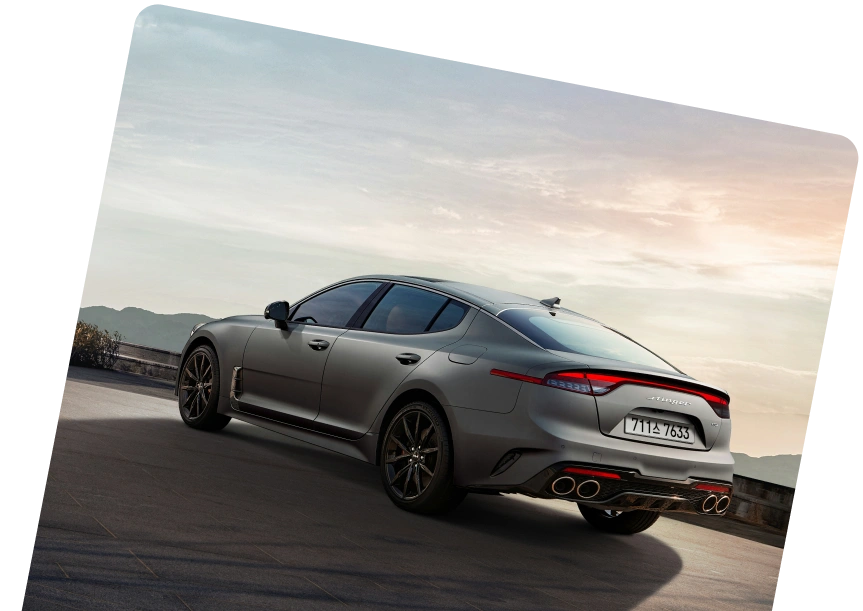





Charging an electric car in the UK costs anywhere from under £5 at home to over £30 at a rapid public charger and the difference comes down to where, when, and how you charge. This article gives you the real 2026 UK rates, a cost-per-mile comparison against petrol, and a clear breakdown of every factor that affects what you actually pay.
How much does it cost to charge an electric car in the UK?
Charging an electric car at home costs around £14.80 for a full 60 kWh battery, based on the Ofgem standard rate of 24.67p per kWh (Q2 2026). Switch to a specialist off-peak tariff and that same charge can drop to under £5. Public rapid chargers cost significantly more — often £40–£50 for 60 kWh.
The 3 main options, ranked cheapest to most expensive:
- Home charging (off-peak tariff) — typically under £5 for 60 kWh
- Home charging (standard tariff), around £14.80 for 60 kWh
- Public rapid charging, £40–£50 for 60 kWh
For a typical driver covering 10,000 miles a year, that gap translates to £210–£245 annually on an off-peak tariff versus £720–£840 on the standard rate. This guide breaks down each option and helps you calculate your own charging costs.
How much does it cost to charge at home?
Home charging costs depend on 2 things: your battery size and the electricity rate you pay. At the 2026 standard tariff of 24.67p per kWh, a full charge for a typical 60 kWh EV costs around £14.80. Switch to an off-peak EV tariff and that same charge drops to roughly £5.70 — a saving of £9.10 every time you plug in overnight. At a public rapid charger, the same 60 kWh charge costs around £45.60, making home overnight charging up to 87% cheaper.
| Charging scenario | 60 kWh battery cost |
|---|---|
| Home — standard tariff (24.67p/kWh) | £14.80 |
| Home, off-peak tariff (~7–8p/kWh) | £5.70 |
| Public rapid charger | £45.60 |
Current 2026 Ofgem price cap unit rates
The standard variable tariff unit rate for Q2 2026 (April to June) is 24.67p per kWh, with a daily standing charge of 57.21p. This is the baseline for any household not on a specialist EV tariff.
Home EV wallbox installation costs
A home wallbox typically costs between £950 and £1,100 fully installed in 2026. Renters and flat dwellers can claim the UK government's EV Chargepoint Grant — up to £350 off, bringing the net cost to around £600. Homeowners with off-street parking are not eligible. Installation takes 2 to 4 hours.
3-pin domestic plug charging: speed, safety and limitations
A standard 3-pin socket charges at 2.3 kW. A 100 kWh battery takes 43+ hours to fully charge that way. Some manufacturers also cap 3-pin charging at 80% to protect battery health. Occasional top-ups are fine; avoid extension cables and do not rely on a 3-pin socket daily.
Night-rate vs daytime home charging costs
A 7.4 kW home wallbox fully charges a 40 kWh battery in under 6 hours overnight. Octopus Intelligent Go charges at around 7 to 8p per kWh between 23:30 and 05:30, against the standard 24.67p/kWh — roughly 68% cheaper per unit. Battery size determines the total saving: a Dacia Spring (24 kWh) costs £5.92 standard or £2.28 off-peak; a BMW iX3 (108.7 kWh) costs £26.82 standard or £10.33 off-peak.
How much does public charging cost?
Public charging costs more than home charging, and the gap between charger types is significant. In May 2026, the weighted average pay-as-you-go price for slow and fast AC public chargers (3–49 kW) was 54p per kWh — roughly 16p per mile for a typical EV. Step up to a rapid or ultra-rapid DC charger (50 kW+) and that rises to 79p per kWh, or around 24p per mile. Public charging prices have also crept up by approximately 4% year-on-year since May 2025, so the direction of travel is upward, not down.
The practical split is straightforward: slow and fast AC chargers suit everyday top-ups at supermarkets, car parks, and destination sites; rapid DC chargers are the motorway option when you need a meaningful charge in 20–30 minutes. You pay a premium for that speed.
Major rapid charging network rates compared
Rapid network pricing varies considerably across the UK. Here is what the main networks charge on a pay-as-you-go basis in 2026:
| Network | PAYG rate (per kWh) | Subscription rate | Notes |
|---|---|---|---|
| Tesla Supercharger (Tesla owners) | 45p | — | Lowest average for account holders |
| Tesla Supercharger (non-Tesla) | 63p | , | Open to all vehicles |
| Shell Recharge | 79p | , | , |
| Ionity | 74p | , | Motorway-focused network |
| BP Pulse | 89p | 69p (£7.85/month) | Subscription cuts cost significantly |
| Instavolt | 92p | , | Highest network-wide pricing |
For a 60 kWh battery charged from 20% to 80% (36 kWh), costs range from around £16 at a Tesla Supercharger (Tesla owner rate) to £33 at Instavolt. That is a meaningful difference on a long trip.
Slow and fast AC public charger rates across UK networks
Slow (3–7 kW) and fast (7–22 kW) AC charging stations at supermarkets and car parks averaged 54p per kWh in May 2026 — equating to 16p per mile. Individual network rates range from 56p to 89p per kWh depending on location and provider. Some networks offer subscription plans that reduce the per-kWh rate, worth considering if you rely on public charging regularly rather than charging at home.
What factors affect my EV charging costs on each charge?
5 factors drive your EV charging cost on every session, and tariff choice is the biggest lever by far.
- Battery size sets the ceiling — a 100 kWh pack costs roughly 3 times more to fill than a 30 kWh one at the same rate.
- Electricity tariff is where you have the most control: standard rate versus a specialist off-peak tariff represents up to a 68% saving per kWh.
- Charging location creates a 3× cost gap between home and public rapid charging.
- Charger type matters too, DC rapid chargers cost more per kWh than slower AC units.
- Vehicle efficiency varies by model, weather, and driving style, shifting your real cost per mile by 15–20%.
2 further factors are easy to overlook. Charging to 80–90% rather than 100% is cheaper and kinder to the battery. Frequent small top-ups can work out less expensive than infrequent full charges.
Tariff is the lever you control most easily, followed by where you charge and which car you drive.
Can you charge an electric car for free in the UK?
Free public charging for electric vehicles still exists in 2026, but you shouldn't rely on it — around 2.5% of the UK's 75,000+ public charging stations carry no fee. Of those, 68.9% are slow (3–7 kW), 27.5% are fast (7–22 kW), and only 67 are rapid. Free charging is shrinking as operators monetise infrastructure.
For the cheapest paid options, supermarket forecourt rapids and council AC points typically undercut the major networks — often 30–50p/kWh versus 70–87p/kWh at a motorway rapid charger.
Where free public charging points are found
| Venue type | Charger speed | Conditions |
|---|---|---|
| Supermarket car parks (Tesco, Lidl) | Slow–fast (7–22 kW) | Purchase or app registration required |
| Council car parks | Slow AC (3–7 kW) | Free in some areas; check locally |
| Workplace schemes | Slow (3–7 kW) | Employer-funded; varies by company |
| Hotel destination chargers | Slow (3–7 kW) | Guests only |
| Retail parks (IKEA) | Fast (7–22 kW) | Free while shopping; time limits apply |
Battery capacity, kW and kWh: what each term means for your bill
3 terms appear on every charging bill and EV spec sheet:
- kWh (kilowatt-hour) — energy stored and what your meter charges for. A 60 kWh battery holds 60 units of electricity.
- kW (kilowatt), the rate energy flows. A home wallbox delivers 7.4 kW; rapid chargers deliver 50–350 kW. Higher kW means faster charging, not cheaper electricity.
- Miles per kWh, real-world efficiency. At 3.5 miles per kWh, you travel 3.5 miles on each unit you buy.
Octopus Intelligent Go cuts the overnight rate to around 7–8p per kWh (23:30–05:30) — roughly 68% below the standard 24.67p cap rate.
Cost-per-mile as the practical comparison metric
On a home standard tariff, charging costs around 7.05p per mile. Switch to an off-peak EV tariff and that falls to roughly 2.71p per mile — against approximately 19.31p per mile for a 40 mpg petrol car.
EV electricity consumption by battery size
| EV category | Example models | Battery size | Consumption |
|---|---|---|---|
| Small city car | Dacia Spring, Fiat 500e | 20–25 kWh | ~25 kWh/100 miles |
| Family hatchback | VW ID.3, MG4 | 50–70 kWh | ~17–20 kWh/100 miles |
| Large SUV | Tesla Model Y, Hyundai IONIQ 5 | 75–100 kWh | ~18–22 kWh/100 miles |
Charging cost calculation and worked examples
Formula: battery size (kWh) × tariff rate (p/kWh) ÷ 100 = cost in pounds.
| Model | Battery | Standard (24.67p) | Off-peak (7.5p) |
|---|---|---|---|
| Nissan Leaf | 40 kWh | £9.87 | £3.00 |
| Tesla Model 3 | 60 kWh | £14.80 | £4.50 |
| Hyundai IONIQ 5 | 77 kWh | £18.99 | £5.78 |
Estimated monthly charging costs for typical UK drivers
- Low-mileage urban driver (500 miles/month, mostly home off-peak): ~£15–18/month
- Commuter (800 miles/month, 80% home, 20% public): ~£35–40/month
- Long-distance driver (1,500 miles/month, mixed home and rapid): ~£60–80/month
Your bill shifts most when you move from home to public rapid charging, that's where the cost-per-mile gap widens fastest.
How does charging cost compare to filling up a petrol or diesel car?
Home-charged EVs cost dramatically less per mile than petrol — but that advantage disappears if you rely on public rapid chargers.
On a standard home tariff, charging your EV runs to around 7.05p per mile. Switch to an off-peak EV tariff and that drops to 2.71p per mile. A typical 40 mpg petrol car costs approximately 19.31p per mile at 2026 fuel prices — making home off-peak charging roughly 7 times cheaper per mile.
Public rapid charging flips the equation. At an average of 79p/kWh, rapid chargers work out at around 21.71p per mile — more expensive than petrol. If you rely mainly on rapid chargers, EVs do not automatically save you money on fuel.
| Scenario | Cost per mile |
|---|---|
| EV — home off-peak tariff | 2.71p |
| EV, home standard tariff | 7.05p |
| EV, public rapid charger | 21.71p |
| Petrol car (40 mpg) | 19.31p |
Real-world commute cost scenarios by model
Take a 30-mile daily commute — 6,000 miles a year. On a home off-peak tariff at 2.71p per mile, a Nissan Leaf or Hyundai IONIQ 5 costs around £163 annually. The equivalent 40 mpg petrol car costs approximately £1,159. Your annual saving: roughly £996.
Switch to public rapid charging only and the same 6,000 miles costs around £1,303 in a Tesla Model 3 — the gap narrows sharply, and at peak rapid-charger rates you could pay more than petrol.
Home charging is what makes the numbers work.
What other costs can electric car owners save on in the UK?
Electric car ownership cuts your costs well beyond the charging bill, and the benefits add up fast — especially if you drive in London.
London Congestion Charge and clean air zone exemptions
Zero-emission vehicles are fully exempt from the London Congestion Charge, which costs £15 per day. For a commuter driving into the zone 254 working days a year, that exemption saves £3,810 annually. London's Ultra Low Emission Zone (ULEZ) adds a further saving for zero-emission vehicles. Birmingham, Bristol, and Bath all run their own clean air zones with daily charges that EV drivers avoid entirely.
Lower servicing and maintenance costs
Electric cars cost roughly £100–£150 per year to service, against £200–£300 for an equivalent petrol car. Electric cars need no oil changes, and regenerative braking reduces brake wear — saving £200–£400 over the vehicle's lifetime.
| Saving | Annual benefit |
|---|---|
| London Congestion Charge (254 days) | £3,810 |
| ULEZ exemption | Variable by zone |
| Servicing vs petrol equivalent | £50–£150/year |
| Brake replacement reduction | £200–£400 (lifetime) |
How can you reduce what you pay to charge your electric car?
Switching to an EV-specific electricity tariff is the single biggest lever you have over your charging bill — cutting the unit rate by up to 68% compared to the standard cap.
Named EV electricity tariffs from major UK providers
4 tariffs dominate the UK market in 2026. Octopus Go fixes the night rate at 6.99p per kWh from April 2026 (23:30–05:30), with no smart-charging requirement. Octopus Intelligent Go runs at 7–8p per kWh overnight and auto-schedules your charge around the cheapest grid periods — both require a compatible smart meter. OVO Drive Anytime and E.ON Drive offer off-peak windows with rates that vary by postcode; British Gas Electric Drivers adds a similar overnight option. All 5 tariffs sit well below the standard 24.67p/kWh cap rate.
Renewable electricity tariffs for EV drivers
Green tariffs from major suppliers match your usage to 100% renewable generation. Time-of-use plans prioritise wind and solar periods, which often overlap with overnight off-peak windows. Most carry a small premium of 1–2p per kWh above the equivalent standard EV tariff.
Home vs public vs rapid charging: lowest-cost strategy for your driving pattern
Your mileage profile determines the right mix:
- Under 500 miles/month — charge at home on an off-peak tariff; avoid public chargers entirely
- 500–1,000 miles/month, 80% home off-peak, 20% public AC at supermarkets or workplaces
- Over 1,000 miles/month, 60% home, 30% public AC, 10% rapid for motorway runs only
Is charging an electric car in the UK worth the cost?
Charging an electric car in the UK is worth the cost but only if you can charge at home regularly on an off-peak tariff. Home-charged EVs cost 50–75% less per mile than petrol in 2026. That saving is real and significant.
Public rapid charging is a different story. Rapid charger rates erode the EV cost advantage fast, and relying on motorway rapid chargers can push your per-mile cost above petrol.
Your personal charging bill comes down to 3 factors: your access to home charging, your chosen electricity tariff, and your mix of home versus public sessions. Get all 3 rightЖ overnight home charging on a specialist tariff, with public AC top-ups at supermarkets for occasional longer trips, and an EV is genuinely cheaper to run than a petrol or diesel equivalent.
Use the cost formula from the calculation section to work out your own figure using your local electricity rate and your car's battery size.
Is it cheaper to charge your car at night?
Night charging cuts your electricity cost by around 61% compared with daytime rates, making it the single biggest lever you have on your annual charging bill.
Standard UK electricity runs at 24.67p/kWh under the Q2 2026 Ofgem price cap. Off-peak EV tariffs drop that to 7–8p/kWh during overnight windows, typically 23:30–05:30 or 23:00–06:00. The saving on a single full charge is substantial.
| Scenario | Rate | Cost for 60 kWh full charge |
|---|---|---|
| Daytime (standard rate) | 24.67p/kWh | £14.80 |
| Night rate (off-peak tariff) | 7–8p/kWh | £4.20–£4.80 |
| Saving per charge | ~£10.00–£10.60 (61%) |
Over a year, that difference compounds quickly. At 10,000 miles annually, night-rate charging costs roughly £210–£245 compared with £720–£840 on a standard daytime tariff.
Tariffs offering overnight rates in 2026:
- Octopus Go — off-peak rate from 7p/kWh, window 00:30–04:30
- Octopus Intelligent Go, 7–8p/kWh overnight; auto-schedules your charge so you don't have to time it manually
- OVO Drive, overnight EV rate with smart scheduling
- E.ON Drive, dedicated EV tariff with off-peak window
- British Gas Electric Drivers, overnight rate for home EV charging
Why does night charging cost less? Grid demand drops sharply after midnight, so wholesale electricity prices fall and suppliers pass that saving directly to EV customers on these tariffs.
What you need to access night rates: a home wallbox (a standard 3-pin socket won't qualify) and a smart meter so your supplier can verify when you charge. Not every supplier offers EV-specific night tariffs, so it's worth comparing before you switch.
Home vs Public vs Rapid Charging: Which Option Saves You the Most?
Home off-peak charging costs 2.71p per mile, roughly 6 times cheaper than using a public rapid charger at 24p per mile. Which option saves you the most depends entirely on where and how often you charge.
The table below maps your driving pattern to the right charging mix and what it costs annually.
| Driving pattern | Recommended charging mix | Estimated annual cost |
|---|---|---|
| Low mileage (6,000 miles/year) | 100% home off-peak | ~£163 |
| Daily commuter (12,000 miles/year) | 80% home off-peak, 20% public AC | ~£430–£500 |
| Long-distance (20,000 miles/year) | 60% home off-peak, 30% public AC, 10% rapid | ~£900–£1,200 |
Home off-peak charging is the cheapest option available to you — but it requires a wallbox and a smart meter to access overnight rates. If you can charge at home, this is your default strategy for daily use.
Public AC charging at supermarkets and workplaces sits in the middle of the cost range. It works well for top-ups during the day when you're already parked, but it shouldn't replace home charging if you have access to it.
Public rapid charging is the most expensive option and should be reserved for motorway journeys where you have no alternative. Using rapid chargers regularly instead of a home wallbox can push your annual bill 4 to 5 times higher than it needs to be.
On subscriptions: if you use rapid chargers more than 3 or 4 times a month, a network subscription typically cuts the per-kWh rate enough to pay for itself. For occasional users, pay-as-you-go is the better default.
How to calculate your ev charging cost: The formula you need
The formula for calculating your EV charging cost is:
Battery size (kWh) × electricity rate (p/kWh) ÷ 100 = full charge cost in pounds.
Find your battery size in your vehicle manual or the manufacturer's spec sheet. For your electricity rate, check your bill or use 24.67p/kWh as the 2026 Ofgem baseline.
3 worked examples at standard rate (24.67p/kWh):
| EV size | Battery | Full charge cost | Cost per 100 miles* | |
|---|---|---|---|---|
| Small (Fiat 500e) | 42 kWh | £10.36 | ~£6.50 | |
| Medium (MG4) | 64 kWh | £15.79 | ~£7.20 | |
| Large (Tesla Model 3 LR) | 82 kWh | £20.23 | ~£8.10 |
On Octopus Intelligent Go (7p/kWh overnight): those same charges cost £2.94, £4.48, and £5.74 respectively — roughly 70% less.
Bear in mind: most charges run 20–80%, not 0–100%, so your real cost is typically 60% of the full-charge figure. Charger losses add around 10–15% on top.
For cost per mile, divide your charge cost by the range gained.
*Assumes ~4 miles/kWh real-world efficiency.
Which electricity tariff or off-peak hours cut my charging costs?
Switching to an off-peak EV tariff cuts your charging bill by 67–72% compared to the standard 24.67p/kWh day rate. On a 60 kWh battery, that means paying around £5.70 per charge overnight instead of £14.80 during the day, a saving of £9.10 every time you plug in.
| Tariff | Night rate | Day rate | Full charge (60 kWh) overnight |
|---|---|---|---|
| Octopus Go | 6.99p/kWh | 24.67p/kWh | £4.19 |
| Octopus Intelligent Go | 7–8p/kWh | 24.67p/kWh | £4.20–£4.80 |
| OVO Drive | 5–8p/kWh | 24.67p/kWh | £3.00–£4.80 |
| E.ON Drive | varies | 24.67p/kWh | check postcode |
| British Gas Electric Drivers | varies | 24.67p/kWh | check postcode |
Off-peak windows typically run 23:30–05:30. Octopus Intelligent Go auto-schedules your charging within that window, removing the need to set a timer.
To switch, you need 2 things: a smart meter and a home wallbox. Most suppliers complete the switch within 2–3 weeks. Some tariffs also supply 100% renewable electricity at no extra cost.
Tariff rates change quarterly with the Ofgem price cap, so check current rates before you switch.
Read more on electric cars:
- Best small electric cars
- Are electric cars cheaper to insure?
- What used electric cars should you avoid buying
- Advantages and disadvantages of electric cars
- Should I buy an electric car in 2026? real costs, pros & verdict
- How much does electric car service cost?
- Do electric cars need a MOT?
- How to charge your electric car at home?
- How long do electric car batteries last?
- Why are electric cars so expensive?
- Do electric cars have gears? Are they manual or automatic?
- How long does it take to charge an electric car?
- How much is an electric car?
Table of Contents